Sprinkler head inspection is the part of an annual sprinkler visit most likely to be rushed. The tech walks the floor, glances up, and writes "heads OK." But sprinkler heads age, get painted, get loaded with dust, and get hit by forklifts, and some of them have a test date baked into their install year. Missing that date is a real deficiency, and a real job left on the table.
This guide covers what NFPA 25 expects for sprinkler head inspection and replacement, what to record, and how to turn findings into quotes. Requirements vary by edition and local amendment, so always confirm what your AHJ has adopted.
What to check on every sprinkler head inspection
NFPA 25 calls for sprinklers to be inspected from the floor level every year. Techs are looking for anything that would stop a head from operating or spraying the way it was designed:
- Leakage at the head or fitting
- Corrosion, including green or white buildup on the frame or deflector
- Physical damage, like bent deflectors or broken frames
- Glass bulbs that are empty or have lost fluid
- Paint on the head that wasn't put there by the manufacturer
- Loading: dust, grease, lint, or other buildup
- Wrong orientation, like an upright installed as a pendent
- Obstructions, such as new shelving, ductwork, or storage too close to the deflector
Any head that is painted, corroded, damaged, loaded, leaking, or installed the wrong way gets replaced. You can't clean or touch up a painted or corroded sprinkler.
Sample testing by age and type
Some sprinklers have to be sent to a recognized testing lab once they reach a certain age. The lab tests a sample, and if it fails, every sprinkler in that sample group gets replaced. The common triggers in NFPA 25:
| Sprinkler type | First test | Then | |---|---|---| | Fast-response | 20 years in service | Every 10 years | | Standard-response | 50 years in service | Every 10 years | | Standard-response | 75 years in service | Every 5 years | | Dry sprinklers | 10 years in service | Every 10 years | | Extra-high temperature or harsh environments | Every 5 years | Every 5 years | | Made before 1920 | Replace | — |
A sample is at least 4 sprinklers or 1% of the group, whichever is more. Instead of testing, the owner can choose to replace the whole group.
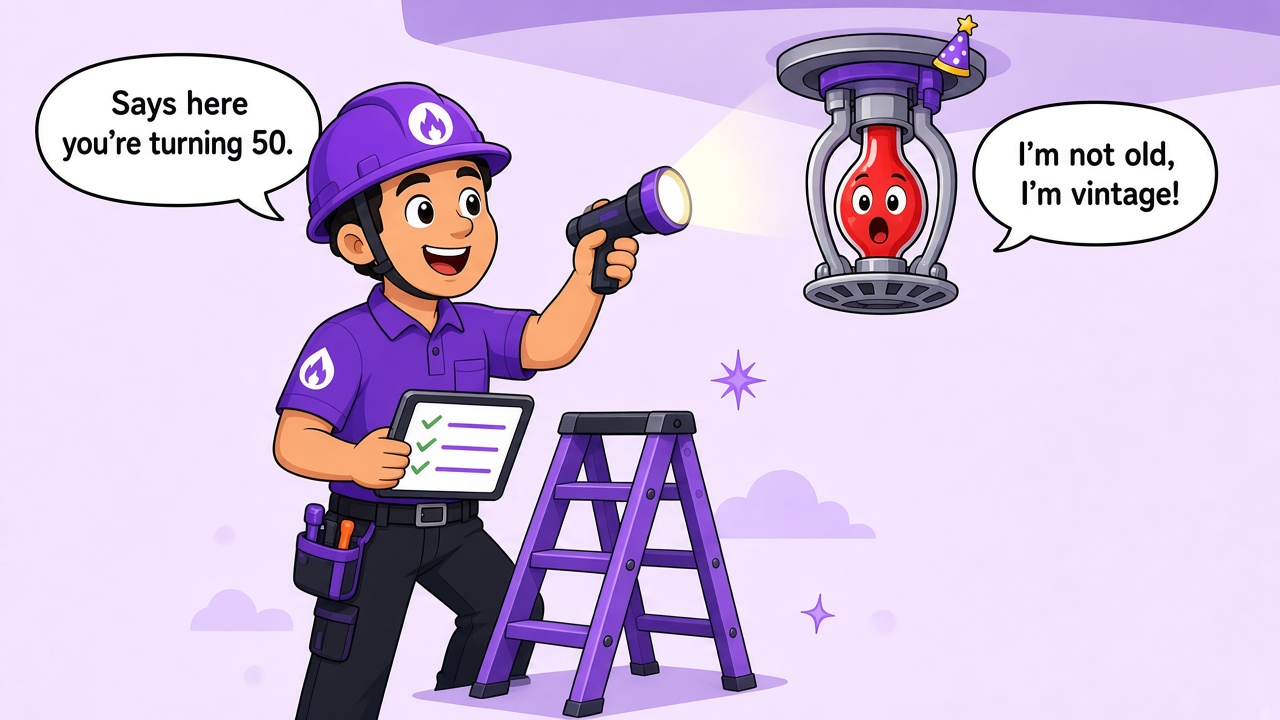
The install year is usually stamped on the sprinkler. If a 1976 building still has original standard-response heads, it's already past the 50-year mark this year. That's worth flagging on the report, because many owners have never heard of it.
Check the spare sprinkler cabinet
Every system needs a spare sprinkler cabinet with heads that match what's installed, plus the right wrench for each type. The minimum count depends on system size:
- 300 sprinklers or fewer: at least 6 spares
- 301 to 1,000 sprinklers: at least 12 spares
- More than 1,000 sprinklers: at least 24 spares
Also check that the cabinet has a list of the sprinklers installed, and that it's kept somewhere cool, under 100°F. An empty cabinet after a repair is one of the easiest deficiencies to find and fix.
What to record so findings get fixed
"Some heads painted" can't be priced. A useful sprinkler head finding shows:
- Location (floor, room, grid line, or nearest door)
- Head type: pendent, upright, sidewall, concealed, or dry
- Response type and temperature rating
- Manufacturer, model, or SIN, and the year on the head
- The problem: painted, corroded, loaded, damaged, or due for sample testing
- How many heads are affected
For example: "2nd floor break room, 4 pendent standard-response 155°F heads, painted during renovation, replace 4 heads and escutcheons." That note can be quoted the same day. We cover this habit in more detail in writing deficiency notes that turn into quotes.
Tie it into the rest of the sprinkler visit
Sprinkler head inspection fits naturally into the annual visit covered in our guide to NFPA 25 sprinkler inspection frequency. Dry sprinklers in freezer doorways and on loading docks deserve extra attention in cold weather; see winter freeze checks for sprinkler systems and dry sprinkler low-point drains. If the building has a fire pump, the same visit is a good time to confirm the head count against the original design, since added heads can change the hydraulics. New heads must match the system design under NFPA 13.
How Optic helps
In Optic, each building keeps its sprinkler details with the install year, head types, and spare cabinet count. Techs mark findings on a phone or tablet, add photos of painted or corroded heads, and note the location and quantity. The install year on the record helps the office see when a head group is getting close to its 20-, 50-, or 75-year sample test. Findings carry straight into an estimate with the part and quantity filled in.
FAQ
How often should sprinkler heads be inspected? NFPA 25 calls for sprinklers to be inspected from the floor level every year. Heads in concealed spaces with no access, or areas that are unsafe to enter during normal operation, have their own allowances.
When do sprinkler heads need to be replaced or tested? Standard-response heads are sample tested at 50 years and every 10 years after, fast-response heads at 20 years, and dry sprinklers at 10 years. Any painted, corroded, damaged, loaded, or leaking head should be replaced right away.
Can you clean a painted or corroded sprinkler head? No. Painted or corroded heads must be replaced. Only heads loaded with dust can sometimes be cleaned, using methods the manufacturer allows.
How many spare sprinklers do you need? At least 6 for systems with 300 heads or fewer, 12 for 301 to 1,000, and 24 for more than 1,000, plus a wrench for each type.