Almost every fire sprinkler system tied to a public water supply has a backflow preventer on it. It keeps sprinkler water, which may have sat in the pipe for years, from flowing back into drinking water. It is also one of the most misunderstood pieces on the fire line, because two different groups want it tested for two different reasons.
The water purveyor wants proof the assembly stops backflow. The fire code wants proof it lets enough water through when the sprinklers need it. Backflow preventer testing on fire systems has to answer both questions, and the report has to show both answers. Requirements vary by NFPA 25 edition, state plumbing code, and the local water authority, so always confirm what your AHJ and purveyor have adopted.
Two tests, two jobs
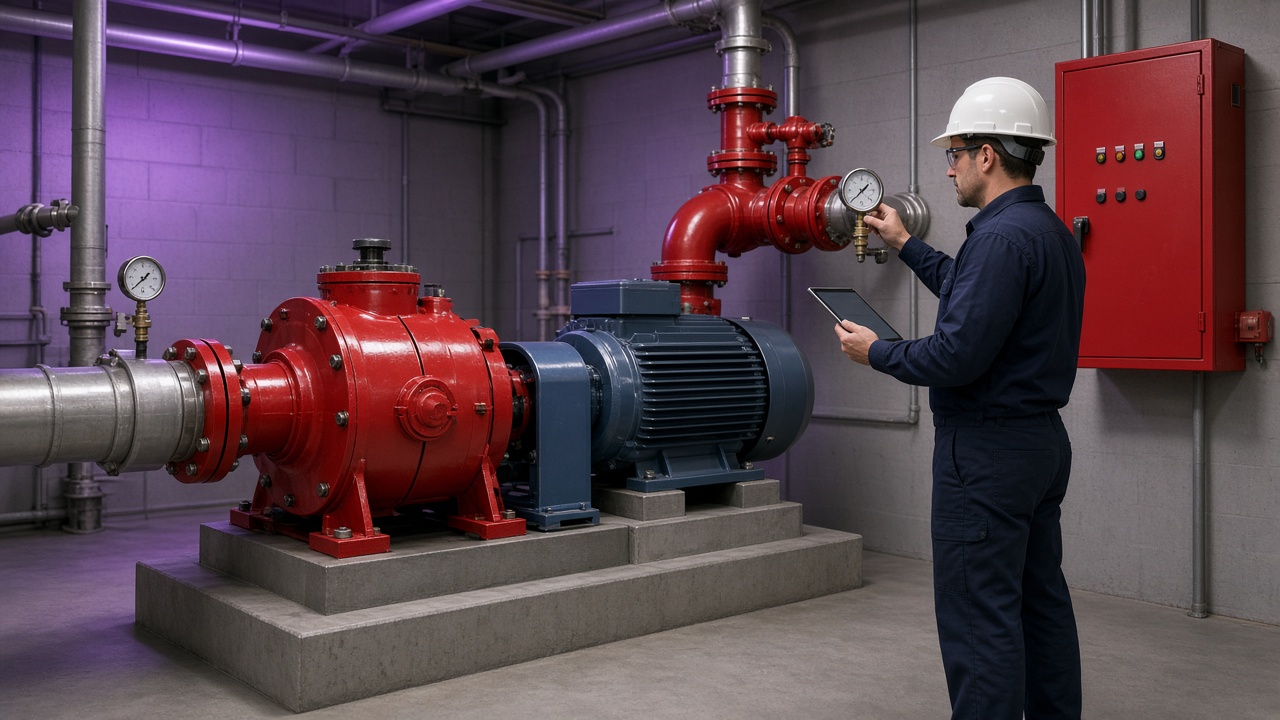
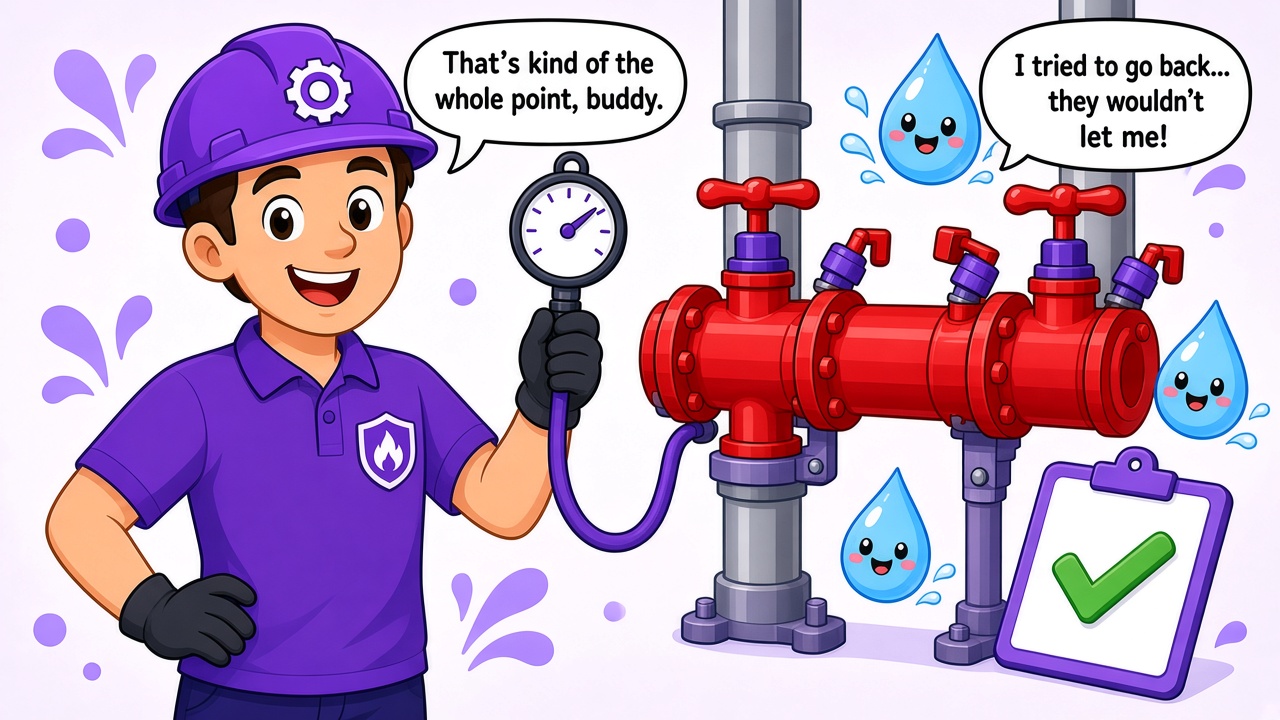
The backflow (cross-connection) test. Usually required every year by the water purveyor or health department under the local cross-connection control program. A certified backflow tester connects a differential pressure gauge to the test cocks and checks that each check valve holds tight and that the relief valve on a reduced pressure zone (RPZ) assembly opens when it should. Many jurisdictions require the tester to hold a specific certification and to file results on the purveyor's form or portal.
The forward flow test. Required by NFPA 25 for backflow prevention assemblies on fire systems. The assembly is flowed at least at the system's demand rate, typically once a year, to prove it isn't restricting water to the sprinklers. A check valve that seals perfectly can still be stuck partly closed, fouled, or undersized for a later system change. The cross-connection test won't catch that. The forward flow test will.
A contractor who only does one of these is leaving the customer partly out of compliance, and leaving work on the table.
What techs should check before testing
- Assembly type and size: RPZ, double check valve assembly (DCVA), or detector versions of either (RPDA, DCDA)
- Manufacturer, model, and serial number, matched to what's on file
- Shutoff valves supervised, open, and locked or tamper-switched as required
- Test cocks present, capped, and not leaking
- RPZ relief port clear, with no constant discharge and an air gap to the drain
- Freeze protection in place for outdoor or vault installations (see our winter freeze checks)
- Access: the assembly isn't buried behind storage or in a flooded vault
Before closing any valve, coordinate with the monitoring company and building contact. Shutting a fire line valve takes the system out of service, so impairment procedures apply.
How the forward flow test usually works
The method depends on what the riser was built with:
- A flow test outlet or test header downstream of the backflow preventer. Hoses and a flow measuring device (pitot or flow meter) are used to flow the system demand rate while readings are taken.
- A bypass or loop back to the supply with a flow meter. Common on newer installs, so water doesn't have to be dumped to grade.
- Main drain or other outlets. Sometimes used where no test header exists, though it may not reach the full demand flow. If the full demand rate can't be reached, document what was flowed and flag it.
If there's no practical way to test at demand, that's a finding by itself. A test header or flow meter retrofit is a legitimate repair recommendation.
What belongs on the report
A useful backflow and forward flow record includes:
- Assembly type, size, make, model, and serial number
- Location (riser room, vault, exterior enclosure)
- For the backflow test: differential readings across each check, relief valve opening point on an RPZ, and pass/fail
- For the forward flow test: required flow (from the hydraulic calc or system data plate), actual flow achieved, static and residual pressures upstream and downstream, and pass/fail
- Tester name and certification number where required
- Any repairs made on site, with parts replaced
- Time the system was out of service and restored
"Backflow tested OK" doesn't protect the contractor or the owner. Numbers do.
Findings that should turn into quotes
These are the backflow issues that show up again and again, and every one is priceable if the note is specific (see how to write deficiency notes the office can price):
- Check valve not holding tight: rebuild kit, rubber parts, or springs
- RPZ relief valve discharging continuously: relief valve repair, usually tied to a fouled first check
- Forward flow below system demand: internal inspection, obstruction cleaning, or assembly replacement
- Leaking test cocks or missing caps
- Shutoff valve not supervised, not locking, or failing to fully close
- No way to forward flow test: install a test header or flow meter
- Freeze damage or no heat in the enclosure
- Assembly no longer on the purveyor's approved list after a code change
Write the size, make, model, and which part failed. That's the difference between a quote the office can send the same day and a second trip to the building.
Keeping both tests on the calendar
The hard part isn't the test. It's remembering that one assembly has two clocks: the purveyor's annual cross-connection test, often with its own filing deadline, and the NFPA 25 forward flow test that rides with the annual sprinkler inspection. Different techs, sometimes different subcontractors, and different paperwork.
In Optic, each backflow assembly can sit on the building as its own piece of equipment with both test types scheduled, so the techs see what's due on site, readings get captured in the inspection, and failed checks become deficiencies that roll straight into an estimate. If you're sorting out the rest of the sprinkler ITM calendar, start with our guide to NFPA 25 sprinkler inspection frequency.
FAQ
How often does a fire sprinkler backflow preventer need to be tested? Most water purveyors require a backflow test every year, and NFPA 25 calls for an annual forward flow test on backflow prevention assemblies in fire systems. Confirm the edition and local rules your AHJ and water authority use.
Is the forward flow test the same as the annual backflow test? No. The backflow test proves the assembly stops reverse flow. The forward flow test proves it passes enough water at system demand. Both are usually needed.
Who can perform backflow preventer testing? Many jurisdictions require a certified backflow tester for the cross-connection test, and some require the results to be filed with the water purveyor. Forward flow testing is typically done by the fire protection contractor as part of NFPA 25 work.
What if the system has no test header? Document what was flowed and how, note that full demand couldn't be verified, and recommend a test header or flow meter so the test can be done properly next year.