A fire pump sits idle almost all of its life. The fire pump churn test, also called the no-flow test, is the one regular moment when someone proves it will start, run, and hold pressure without a fire to make it happen. It's also one of the most routine tasks on the schedule, which makes it easy to rush through with a checkmark and a signature.
This post covers what a churn test is for, what techs should be watching while the pump runs, which numbers belong on the report, and the readings that should trigger a follow-up. Frequencies and run times vary by NFPA 25 edition and pump type, so always confirm the edition your AHJ has adopted. For the weekly-to-annual calendar, see NFPA 25 fire pump testing.
What the churn test proves
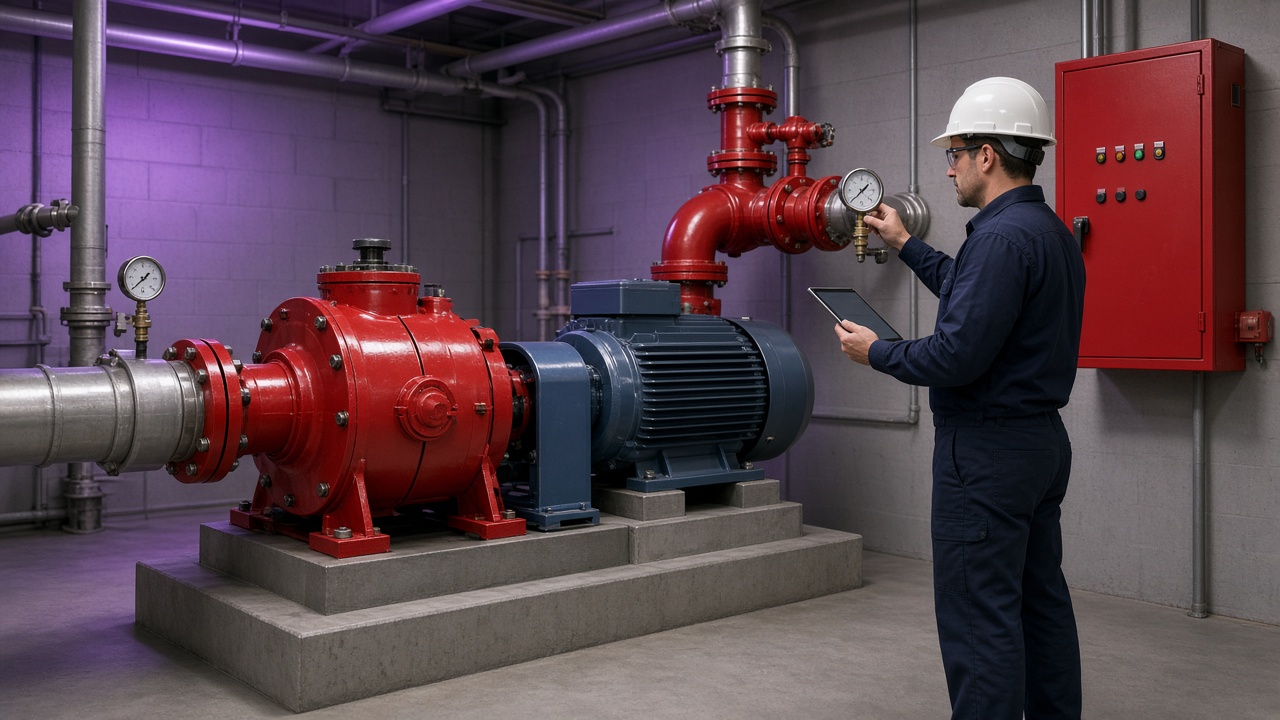
In a no-flow test the pump starts and runs with no water flowing out to the system, apart from small cooling or relief flow. It isn't a performance test. That's what the annual flow test is for. The churn test answers a simpler set of questions:
- Does the pump start automatically when pressure drops, the way it would in a real event?
- Does the driver (electric motor or diesel engine) run smoothly and stay within normal ranges?
- Does the pump build and hold the expected churn pressure?
- Are the packing, bearings, and cooling all behaving?
Recent NFPA 25 editions generally call for weekly runs on diesel pumps (about 30 minutes) and allow monthly runs on many electric pumps (about 10 minutes), with exceptions that keep some electric pumps on a weekly schedule. Check the adopted edition before you set the frequency for a site.
Before the pump starts
- Record suction and discharge pressure at rest.
- Check the pump room. Heat on (a pump room should stay above 40°F, and warmer for diesel per the engine maker), ventilation clear, no water on the floor.
- Confirm valve positions. Suction, discharge, and bypass valves open; test header valves closed.
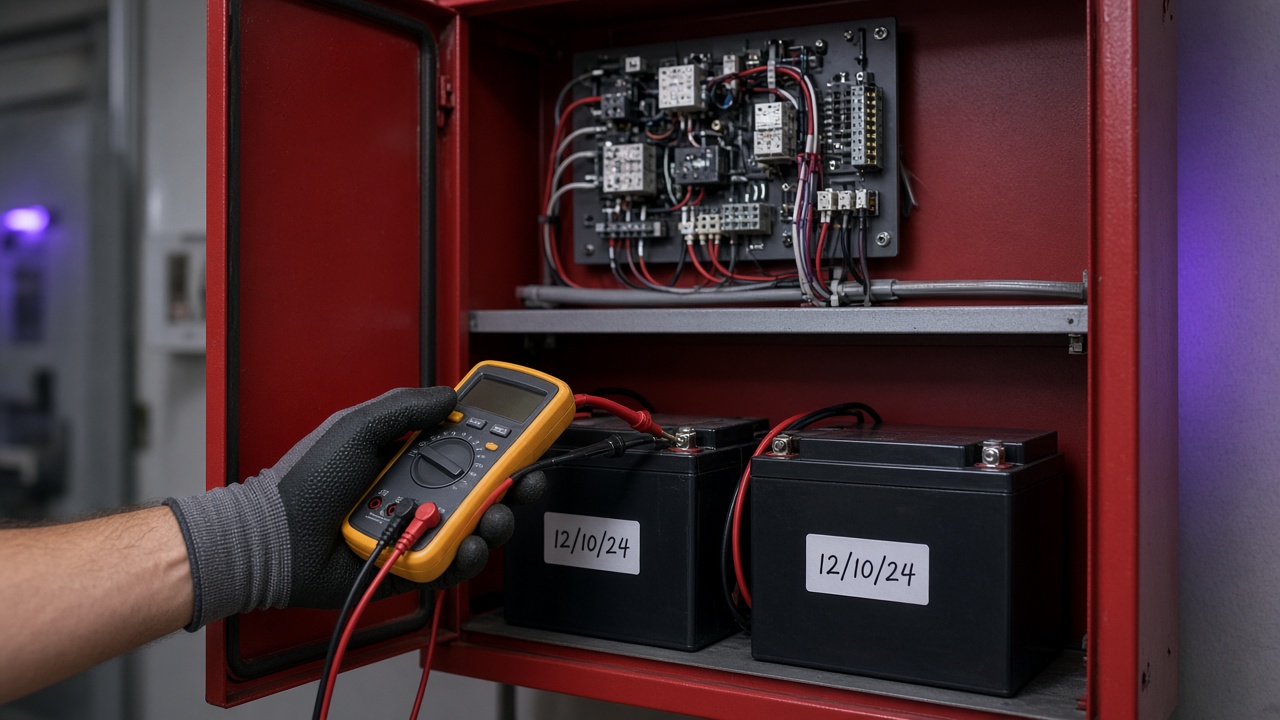
- Look at the controller. Power available, no alarms, and on diesels, both battery sets charged and the fuel tank level where it should be.
- Note the jockey pump. Frequent short-cycling before the test often points to a leak in the system.
While it runs
Start the pump the way the code expects: by dropping system pressure through the sensing line test valve, not by pressing the start button. That proves the automatic start actually works. Then watch and record:
- Start pressure. The pressure at which the pump kicked on, compared with its set point.
- Suction and discharge pressure at churn. Compare with last week's and the acceptance test numbers.
- Packing glands. A slight drip is normal and keeps the packing cool. No drip at all, or a steady stream, both need attention.
- Noise and vibration. Unusual sounds, rubbing, or shaking.
- Casing relief valve. It should discharge enough water to keep the pump from overheating at churn.
- Pressure relief valve. Where one is installed, note whether it opened. A relief valve flowing at churn can mean speed or pressure settings are off.
On electric pumps, also note the time to reach running speed. On diesel pumps, record time to crank and start, oil pressure, engine temperature, cooling water flow, and how the engine sounds and smokes. Run it for the full required time.
Compare churn pressure with the original NFPA 20 fire pump acceptance test when that record is on file. One reading means little without the baseline.
After it stops
- Confirm the pump stopped the way the controller is set up to stop it (automatic or manual).
- Check that everything returns to normal standby and the controller is in auto.
- Note any alarms that came up during the run.
Readings that should send someone back
- Churn pressure trending down week after week. That can be impeller wear, an obstruction, or suction supply trouble.
- Pump didn't start at its set point, or needed a manual start.
- Diesel slow to crank, low oil pressure, or high temperature.
- Packing running hot or dry, or bearings that are noisy or hot.
- Jockey pump short-cycling or the main pump starting unexpectedly between tests.
- Pump room too cold or the controller in "off" when the tech arrived.
Each of these is a deficiency the office should see right away, with a photo and the actual numbers, not a vague note to "monitor." Write it so it can be priced, as in inspection deficiency notes that lead to quotes.
Why the numbers matter more than the checkmark
A churn test log is only valuable if you can compare it. One reading of 120 psi tells you almost nothing. Fifty-two weeks of readings tell you whether the pump is healthy, drifting, or about to fail its annual flow test. That history also protects the contractor and the owner when an AHJ, insurer, or attorney asks what was being checked.
Frequently asked questions
What is a fire pump churn test? It is a no-flow test: the pump starts and runs without flowing water to the system, apart from small cooling or relief flow. It proves the pump will start, run, and hold churn pressure. It is not a substitute for the annual flow test.
How often is a churn test required under NFPA 25? Diesel pumps are generally weekly. Electric pumps may be weekly or monthly depending on the adopted edition, with some exceptions. Confirm the edition and run time before you set the site's schedule.
Should techs start the pump from the controller start button? Not for the automatic-start proof the test is meant to provide. Start it by dropping system pressure through the sensing line test valve, the way a real pressure drop would start it.
What churn-test readings should be recorded? At a minimum: suction and discharge pressure at rest and at churn, start pressure versus set point, unusual packing, vibration, or relief-valve discharge, and diesel engine readings when applicable. Compare them with prior tests and the acceptance data.
How Optic helps
Optic gives techs a pump test checklist on their phone, with fields for start pressure, suction and discharge readings, diesel engine readings, and photos. Results save to that pump's history, so the next tech can see last month's numbers before starting. Deficiencies flow straight to the office for a quote. If your pump logs still live on a clipboard hanging in the riser room, see how Optic handles recurring inspections.
This article is general guidance for fire protection professionals. Always follow the NFPA 25 edition and local amendments adopted by your Authority Having Jurisdiction, and the pump, driver, and controller manufacturers' instructions.