When the power goes out, emergency lights and exit signs are what get people to the door. Emergency lighting testing is one of the simplest life safety jobs a contractor does, and one of the most common things an inspector writes up. Usually the light works fine. The problem is that nobody can prove it was tested.
This guide covers the two tests NFPA 101, Life Safety Code calls for on battery-powered emergency lighting, what to record, and how to turn a failed unit into a quote instead of a note nobody reads. Requirements vary by code edition and local amendment, and healthcare occupancies often add accreditation rules on top, so always confirm what your AHJ has adopted.
The two tests: monthly and annual
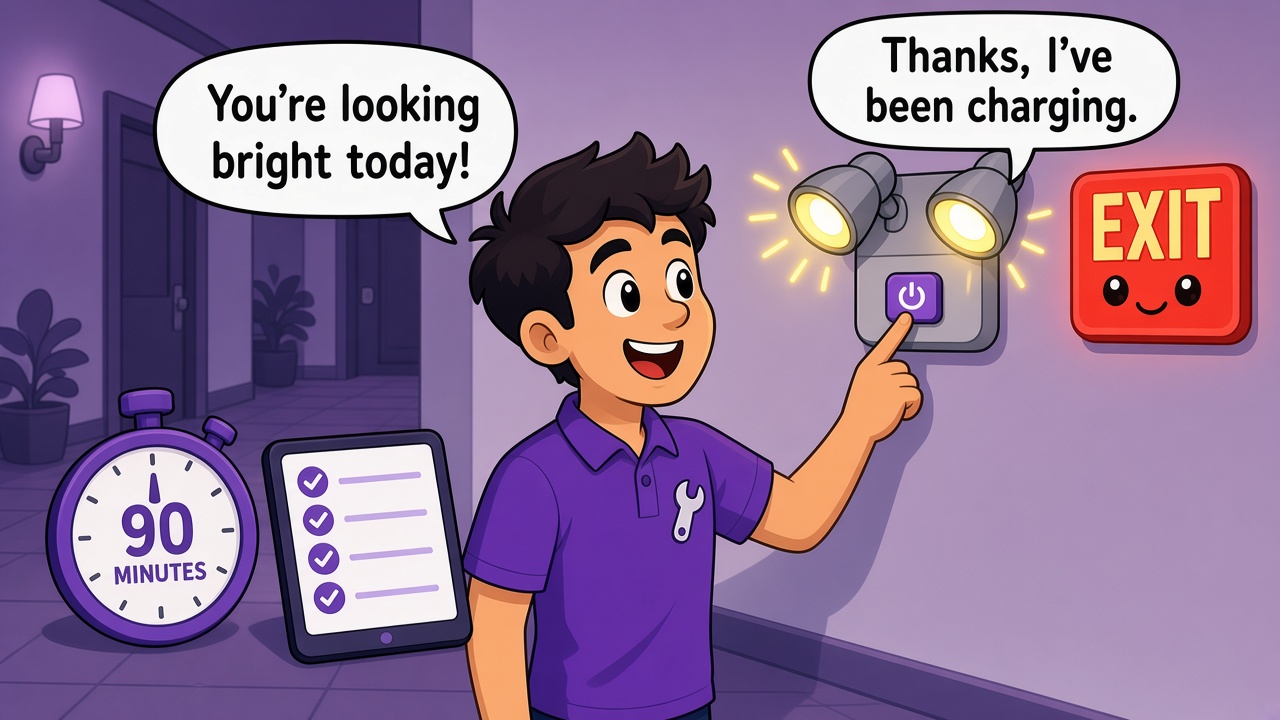
Monthly functional test: at least 30 seconds. Every emergency light and battery-backed exit sign is tested for at least 30 seconds each month, at intervals of no less than 3 weeks and no more than 5 weeks. The tech pushes the test button or cuts normal power and confirms every lamp head comes on and stays lit.
Annual test: 90 minutes. Once a year, battery-powered units run for the full 1.5-hour duration. A unit that lights at the 30-second test can still die at minute 40. Only the long test proves the battery can carry people out of a dark building.
Some buildings use self-testing or self-diagnostic units, or computer-based systems that run and log these tests automatically. Those still need someone to check the log and act on failures. Generator-fed emergency lighting follows NFPA 110 testing instead of the battery test.
What techs should check on every unit
- Unit location, written so the next tech can find it (floor, corridor, near which room or door)
- Unit type: emergency light, exit sign, or combo, and battery or generator fed
- Every lamp head lights and is aimed at the egress path, not the ceiling
- Exit sign legend is lit, readable, and shows the right arrow direction
- Charging indicator is on under normal power
- Housing, lens, and mounting are intact, with nothing blocking the light
- Battery date or age, if marked
What to record so the test counts
NFPA 101 expects a written record of these tests that the AHJ can review. "All lights OK" on a clipboard doesn't hold up. A useful record shows:
- Date and test type (30-second monthly or 90-minute annual)
- Tech name
- Each unit by location, with pass or fail
- For the annual test, how long each failed unit actually ran
- The exact failure: no light, one head out, dim at 60 minutes, no charge light, cracked lens, missing arrow
- What was fixed on site and what still needs a return trip
Turn failures into quotes
Emergency lighting failures are some of the easiest repairs to sell, because they are cheap, specific, and easy for the customer to understand. The note just has to be specific.
"Some lights not working" can't be priced. "3rd floor east corridor, combo unit by stair 2, battery failed at 22 minutes, replace 6V 4.5Ah battery" can be quoted the same day. If the unit is old or the parts cost more than a new one, say "replace unit" and note the model.
We covered this habit in detail in writing deficiency notes that turn into quotes. The same rule applies here: location, part, failure, and fix.
Tie it into the rest of the inspection
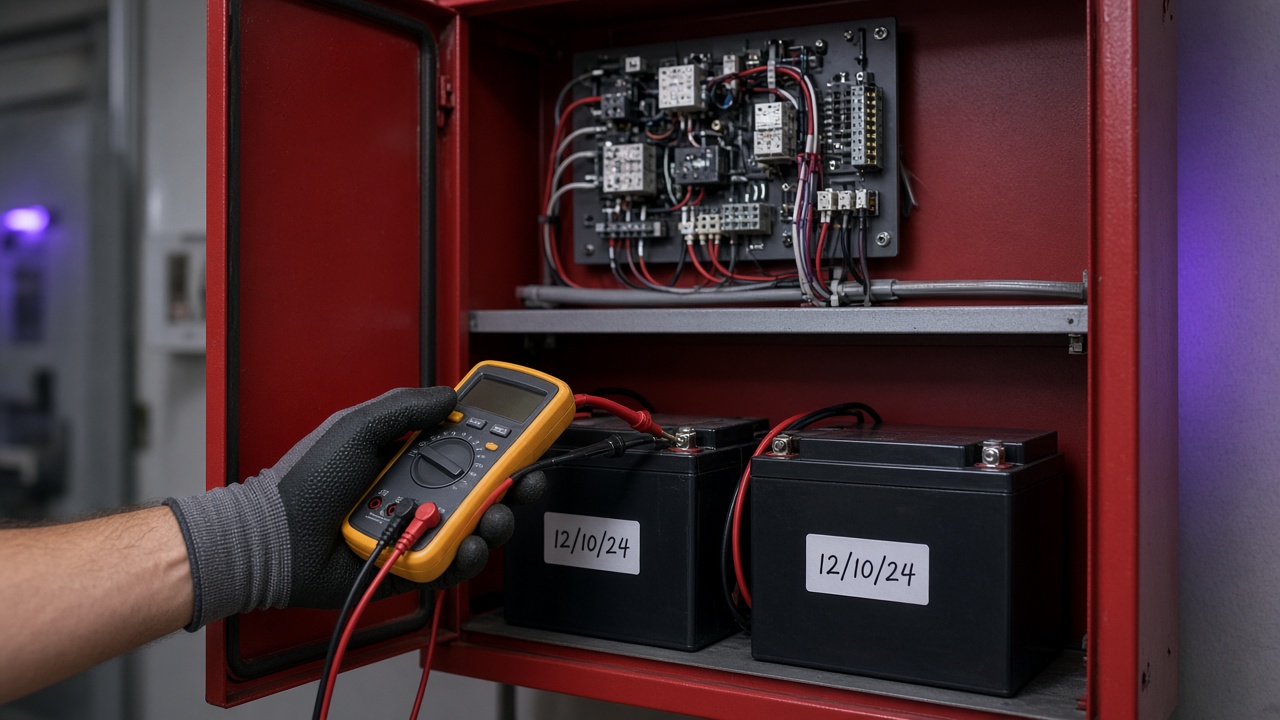
Emergency lighting is often tested on the same visit as other life safety work. If you're already on site for monthly fire extinguisher inspections, adding the 30-second light test is one more line on the route. The annual 90-minute test pairs well with the annual fire alarm inspection, since both need a planned time with the building. Fire alarm panels have their own battery checks too; see fire alarm standby battery testing.
How Optic helps
Optic keeps every emergency light and exit sign as its own asset with a location. Techs work the list on a phone or tablet, mark each unit pass or fail, and add a photo of anything broken. The report shows the date, the tech, and every unit, so it's ready for the AHJ. Failed units carry into an estimate with the part and location already filled in, and the next month's visit is already on the schedule.
FAQ
How often do emergency lights need to be tested? Under NFPA 101, battery-powered emergency lighting gets a functional test of at least 30 seconds every month and a full 90-minute test every year. Check the edition your AHJ has adopted.
Does an exit sign count as emergency lighting? Battery-backed exit signs and combo units are tested on the same schedule as emergency lights, because they must stay lit when normal power fails.
What if a unit passes the 30-second test but fails the 90-minute test? It's a failure. The battery can't carry the required duration. Record how long it ran and quote a battery or unit replacement.
Do self-testing emergency lights still need inspection? Yes. Someone still has to check the self-test results or log, act on any failures, and keep the record.