Fire extinguishers are the most common piece of fire protection equipment in almost any building, and the easiest to underestimate. One unit is simple. A campus with a few hundred units, bought in different years, in different agent types, is a scheduling problem with five different clocks running at once. Fire extinguisher inspection and maintenance intervals only work when each of those clocks is tracked per unit, not just per building.
This post walks through the service intervals NFPA 10 lays out, what techs should look for at each one, and how to keep the long-interval work from quietly falling through the cracks. Confirm the NFPA 10 edition and local amendments your AHJ has adopted. For the standard's baseline requirements, see our overview of NFPA 10 fire extinguisher inspection requirements.
The four layers of extinguisher service
Think of extinguisher care as layers, each on its own interval:
- Monthly inspection (a quick visual check, often done by the owner or facility staff)
- Annual maintenance (a thorough hands-on exam by a qualified technician)
- Internal maintenance (for stored-pressure dry chemical units, typically every 6 years)
- Hydrostatic testing (every 5 or 12 years depending on the extinguisher type)
Each layer catches different problems, and each one is easy to miss for a different reason.
Monthly inspection: the quick look
Monthly inspections are meant to be fast. The goal is to confirm the extinguisher is where it should be and ready to use. A typical monthly check confirms that the unit:
- Is in its designated location and clearly visible
- Isn't blocked by furniture, storage, or equipment
- Shows a pressure gauge in the operable range (on gauged units)
- Feels full when hefted, or weighs correctly
- Has its safety pin and tamper seal intact
- Has no obvious physical damage, corrosion, leakage, or clogged nozzle
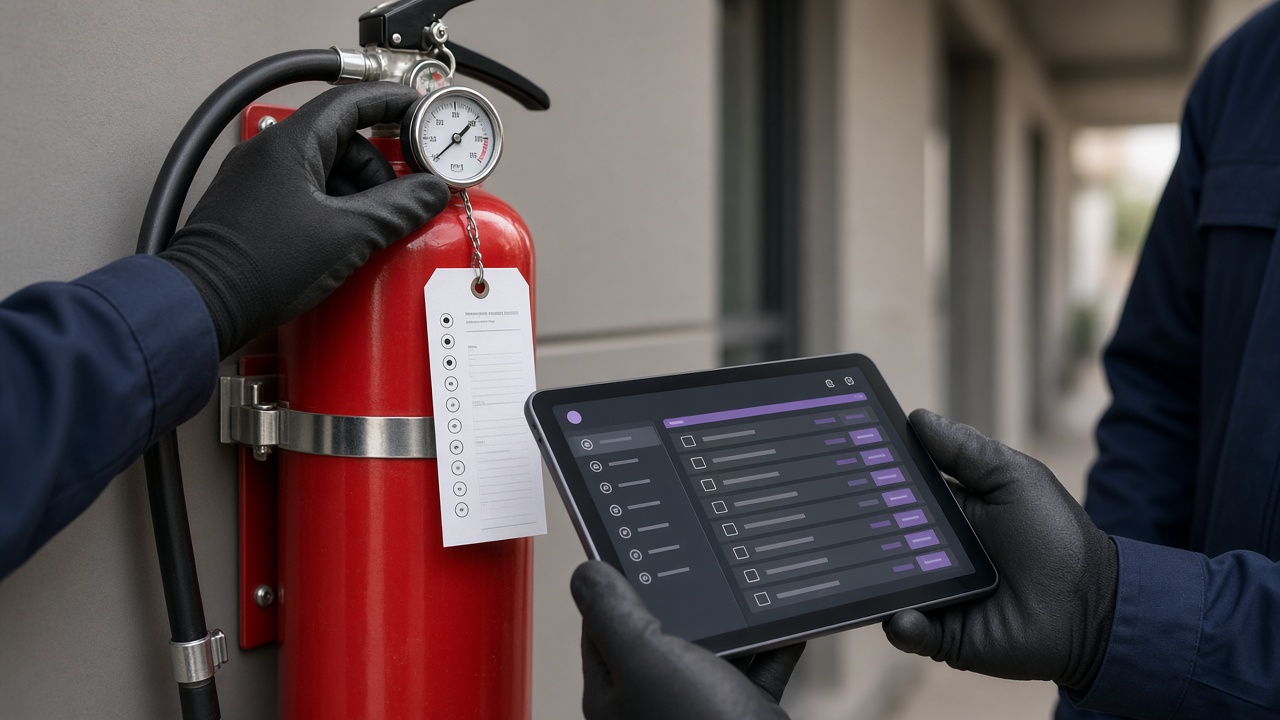
Monthly checks are usually recorded on the tag or in a log. In many buildings these are the owner's responsibility, which is exactly why they get skipped. A service company that reminds customers, or offers to handle monthly checks, catches problems before the annual visit does.
Annual maintenance: the hands-on exam
Once a year, a qualified technician performs maintenance. This goes beyond the monthly look. The tech examines the mechanical parts, the agent, and the expelling means, checks the hose and nozzle, confirms the correct type and rating for the hazard, and verifies the mounting and signage. Then the unit gets a new tag or label showing the date and who did the work.
Annual maintenance is also the moment to flag what's coming due. A tech holding the extinguisher can read the manufacture date and the last hydrostatic test date right off the cylinder. That's the best chance to catch long-interval work before it's overdue.
Internal maintenance: the 6-year teardown
Stored-pressure dry chemical extinguishers that need a 12-year hydrostatic test also require internal maintenance at 6-year intervals. The unit is emptied, examined internally, recharged, and marked with a verification-of-service collar or label.
This is the one most often missed, because nothing about the outside of the extinguisher tells you it's due. You have to know the date of manufacture or last internal exam and do the math.
Hydrostatic testing: 5 or 12 years
Hydrostatic testing pressure-tests the cylinder itself. The interval depends on the extinguisher type. Water, wet chemical, CO2, and foam types are generally on a 5-year cycle. Stored-pressure dry chemical and halogenated agent units are generally on a 12-year cycle.
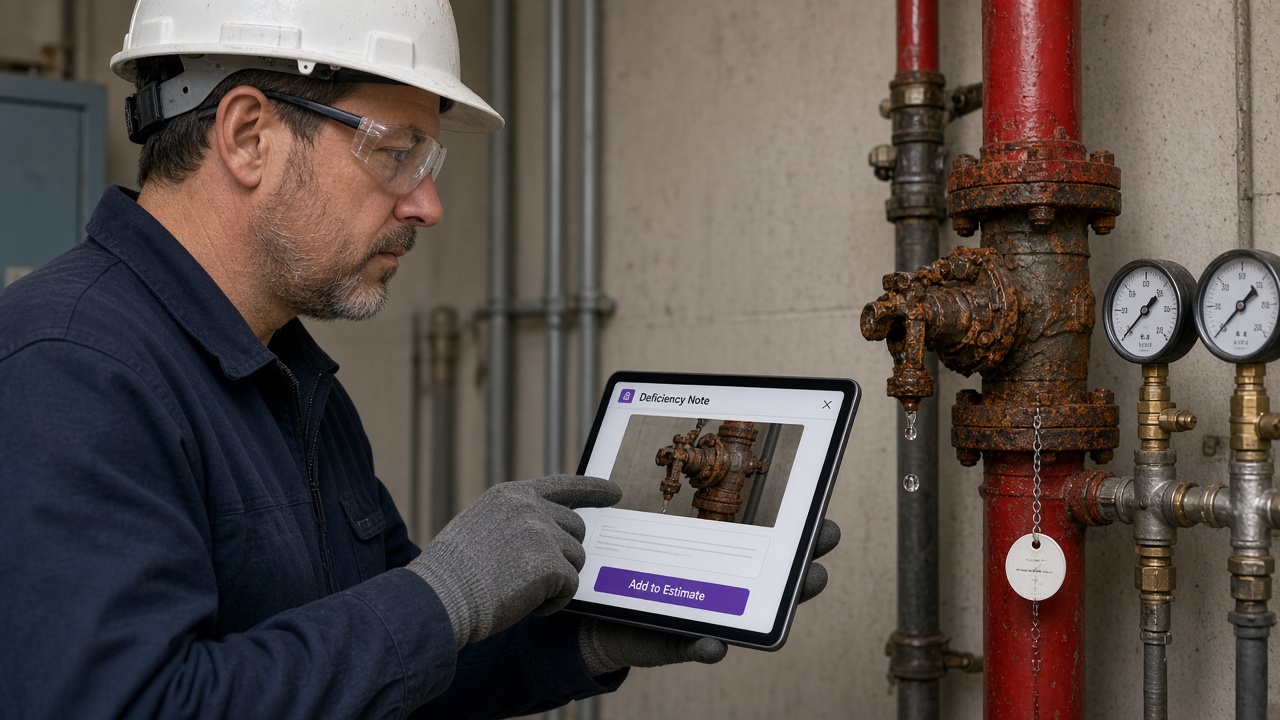
Units that fail, or that are too old or damaged to justify testing, get replaced. That's a quote opportunity, and a conversation the customer should hear about well before the AHJ brings it up. Write the finding so the office can price it, as in inspection deficiency notes that lead to quotes.
Why the long intervals slip
Monthly and annual work happens on a predictable rhythm. The 6- and 12-year work doesn't. A few reasons it falls through:
- It's tracked per unit, not per building. Every extinguisher has its own manufacture date. A building's units are rarely all on the same cycle.
- Tags don't forecast. A tag tells you what was done, not what's coming.
- Swaps break the history. When a unit gets replaced or moved, its service history often doesn't follow.
- It's buried in the report. "Hydro due next year" in a comment field rarely turns into a scheduled job.
Habits that keep it from slipping
- Record manufacture and hydro dates at every annual visit. If the data isn't captured, nobody can schedule against it.
- Track extinguishers individually by location. "2nd floor, east stairwell" beats "extinguisher #14."
- Forecast a year ahead. At each annual, list which units hit 6-year or hydro intervals in the next 12 months, and quote them together.
- Bundle the work. Pulling several units at once for internal maintenance or hydro, with loaners in place, is easier on the customer and more efficient for your shop.
Licensing and tag rules can also vary by city, so keep the adopted NFPA 10 year on your jurisdiction list, as described in how cities adopt NFPA codes.
Frequently asked questions
How often should fire extinguishers be inspected and serviced? Monthly visual inspections, annual maintenance, internal maintenance at 6 years for many stored-pressure dry chemical units, and hydrostatic testing at 5 or 12 years depending on type. Confirm NFPA 10 and the unit's listing.
Who is responsible for monthly fire extinguisher inspections? In many buildings, the owner or facility staff. Annual maintenance is typically performed by a qualified technician, and some jurisdictions require a license.
Why do 6-year and 12-year extinguisher services get missed? Because they are tracked per cylinder, not per building, and nothing on a current annual tag forecasts the next internal or hydro date unless someone recorded the manufacture and last-service dates.
Should overdue extinguishers be replaced or hydro-tested? It depends on the condition, age, and type of the unit, and on whether it can still be maintained to the adopted edition and the manufacturer's instructions. Failed, obsolete, or badly corroded units are usually replaced and should be quoted that way.
How Optic helps
Optic tracks each extinguisher by building and location, with its service history, manufacture date, and inspection results attached. Recurring inspections stay on schedule, and techs capture what they find on site so the office can turn upcoming 6-year and hydrostatic work into estimates instead of surprises. If your extinguisher program still lives on paper tags and memory, see how Optic keeps every unit on schedule.
This article is general guidance for fire protection professionals. Always follow the NFPA 10 edition, manufacturer instructions, and local amendments adopted by your Authority Having Jurisdiction.