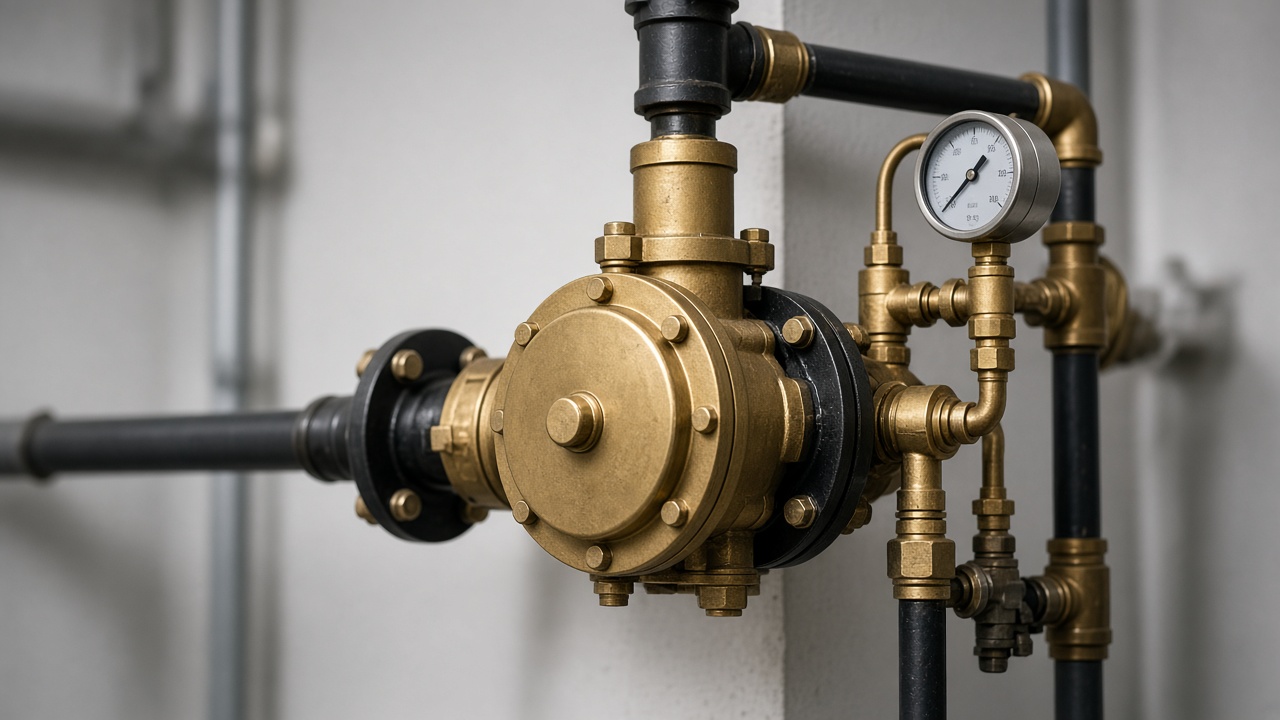
Walk into almost any riser room in a commercial building with a wet pipe sprinkler system and you'll find the same heavy iron body bolted into the riser, wrapped in a tangle of small pipe, gauges, and valves. That's the alarm check valve. Techs see it every visit, but it's also one of the most common places where an inspection report goes thin, with a checkbox that says "OK" and nothing else.
This post covers how an alarm check valve actually works, what each piece of trim does, and what NFPA 25 expects you to inspect, test, and document. Code references follow NFPA 25. Frequencies have shifted between editions, so always confirm the edition your AHJ has adopted.
What the alarm check valve does
An alarm check valve does two jobs:
- It's a check valve. It lets water flow up into the system and keeps system water from draining back into the supply. That holds the system pressure steady even when the supply pressure swings.
- It's an alarm initiator. When water moves through the valve (a sprinkler opens, or someone opens the inspector's test), the valve routes some of that water to an alarm line. The alarm line trips a pressure switch, a water motor gong, or both.
Most wet systems on a municipal supply can get by with a waterflow vane switch alone and no alarm valve. You'll still find alarm check valves on lots of existing buildings, on systems with a water motor gong, and wherever the designer or AHJ wanted one.
Anatomy: the parts your techs should be able to name
The clapper. This is a hinged disc inside the body that sits on a seat ring. In standby it stays closed, held there by the higher system pressure above it (the "differential"). When system pressure drops because water is flowing out, the clapper lifts.
The seat ring and alarm port. The seat has a groove connected to the alarm outlet. When the clapper lifts, water fills that groove and flows out to the alarm line. With the clapper seated, the groove stays dry.
The retard (retarding) chamber. Municipal supplies surge. A pressure spike can lift the clapper for a second and send a slug of water toward the alarm line. The retard chamber is a small tank on the alarm line with a drain restriction. It soaks up short surges so only a sustained flow fills it and sends an alarm. That's how it prevents false alarms. A chamber with a clogged drain causes trouble in the other direction: water collects and the alarm goes off at the wrong time.
Gauges. You'll typically have one gauge below the clapper (supply) and one above (system). In standby, the system gauge should read the same as the supply gauge or higher. A system reading below supply is a red flag, usually a leak or a clapper that isn't sealing.
Main drain. This is usually a 2-inch drain off the riser, used for the main drain test.
Alarm test bypass / alarm shutoff. This valve lets you send water to the alarm line without flowing the system, and lets you silence the alarm line during maintenance. It needs to be left in the correct position when you leave.
Waterflow devices. These are the pressure switch on the alarm line, the water motor gong (mechanical, driven by the water itself), or both.
The sequence when a sprinkler opens
- A sprinkler fuses and water starts flowing out of the system.
- System pressure drops below supply pressure, and the clapper lifts.
- Water flows through the seat groove into the alarm line.
- The retard chamber fills (the delay is usually a matter of seconds).
- The pressure switch closes and signals the fire alarm panel, and/or the water motor gong spins and rings.
- Water keeps flowing to the open sprinkler until the fire department or the owner shuts the system down.
When you test with the inspector's test connection, you're proving that whole chain works from end to end.
What NFPA 25 requires for alarm check valves
Here's the core of the alarm valve and riser work under NFPA 25. Tables for sprinkler systems, valves and trim, and alarm devices in the adopted edition drive these items. The frequencies below reflect common requirements in recent editions:
Inspection
- Gauges (wet systems): inspect for condition and normal pressure. Recent editions call for a quarterly inspection. Gauges must be replaced or tested against a calibrated gauge every 5 years.
- Alarm valve, exterior: inspect for physical damage, leaks, and correct trim valve positions. Recent editions call for a quarterly inspection.
- Retard chamber and alarm drains: check for leakage and make sure the drains work.
- Alarm valve, interior: inspect every 5 years, including the strainers, filters, and restriction orifices. Check the clapper rubber, seat, and hinge.
- Control valves feeding the riser: inspect weekly if sealed, or monthly if locked or electrically supervised.
Testing
- Waterflow alarm devices: vane-type and pressure-switch devices are tested semiannually. Mechanical water motor gongs are tested quarterly. Test from the inspector's test connection where you can, so you're proving the system works, not just the alarm line.
- Main drain test: annually at each system riser, and quarterly where the water supply comes through a backflow preventer or pressure-reducing valve. Record the static pressure and the residual pressure with the drain fully open, then compare to previous results. A significant drop in residual pressure points to a partly closed valve, an obstruction, or a supply problem, and you need to investigate it.
These items sit inside the broader NFPA 25 sprinkler inspection frequency schedule. The exact frequencies and the conditions that change them, like a backflow preventer, a pressure-reducing valve, or a sole supply, belong in your tech's checklist for the adopted edition. Don't leave them to memory.
Deficiencies you'll find in the field
- System gauge reads lower than supply. Look for a leaking clapper, a passing drain valve, or a leak in the system.
- Water continuously dripping from the retard chamber drain. The clapper isn't sealing. Clean the seat or replace the clapper rubber.
- Alarm line valve found closed. No local alarm means a serious impairment. Document it and notify the owner.
- Clogged restriction orifice or strainer. This leads to false alarms or no alarm at all.
- Gauge past its 5-year date or reading zero. This is an easy item to quote.
- Falling main drain residual year over year. Escalate it, because it often points to a valve problem upstream.
Each of these is a quoting opportunity, but only if the tech captures it clearly: a photo of the gauges, the exact readings, and a one-line description the office can turn into a line item. That's the same standard as any other inspection deficiency note that leads to a quote.
Documenting it so the report actually helps
A good alarm valve entry on an inspection report includes:
- Supply and system gauge readings
- Main drain static and residual pressures, with last year's numbers next to them
- Time from opening the inspector's test to alarm at the panel
- Trim valve positions as found and as left
- Gauge manufacture or replacement date
- Photos of anything flagged as deficient
That record protects the contractor, gives the owner something they can act on, and makes next year's comparison possible. It also pairs naturally with other riser-room checks, including freeze-season heat in the valve room. See winter freeze checks for fire sprinkler systems when that visit falls in the fall.
Frequently asked questions
What is an alarm check valve on a wet pipe sprinkler system? It is a riser check valve that also initiates an alarm. It lets water into the system, holds system pressure, and sends water to a pressure switch, a water motor gong, or both when a sprinkler or test connection flows.
How often should an alarm check valve be inspected under NFPA 25? Recent editions commonly call for a quarterly exterior inspection and a 5-year interior inspection, along with gauge inspections and waterflow device tests on their own intervals. Confirm the adopted edition.
Why is water dripping from the retard chamber? A continuous drip often means the clapper isn't sealing, so water is leaking into the alarm line. Short drips after a surge or a test can be normal. A steady drip should be investigated.
Is a waterflow vane switch a substitute for an alarm check valve? Many wet systems on a municipal supply use a vane-type waterflow switch and no alarm valve. Existing buildings, systems with a water motor gong, and some designs still use an alarm check valve. Inspect the equipment that's actually installed.
How Optic helps
Optic was built for exactly this kind of riser work. Techs record gauge readings, drain results, and alarm times right on their phones. Deficiencies get flagged with photos while the tech is still standing in the riser room. The office can then turn those findings into a quote and send a clean report to the owner without retyping anything. If your team is still putting riser data on paper or into a spreadsheet, see how Optic handles inspections.
This article is general guidance for fire protection professionals. Always follow the NFPA edition and local amendments adopted by your Authority Having Jurisdiction, as well as the valve manufacturer's instructions.